


Why Latency Matters: The Critical Role of Low-Latency LED Control Systems in 2026
In the rapidly evolving LED display industry, resolution and brightness are no longer the sole indicators of quality. Today, professionals are prioritizing an often-overlooked technical metric that can make or break the user experience: latency. For applications ranging from live broadcasting and XR virtual production to e-sports arenas and FIFA World Cup stadiums, the ability to deliver real-time visuals is paramount. A delay of even a few milliseconds can disrupt synchronization and ruin viewer immersion. This is why low-latency LED control systems are no longer a luxury but a necessity for high-end professional LED display projects.
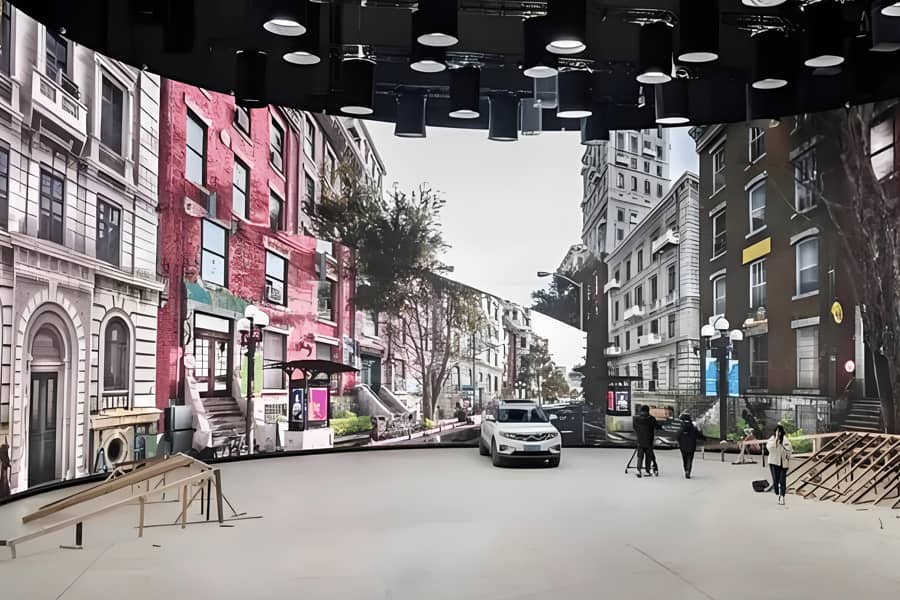
What Is Latency in LED Display Technology?
Latency in an LED display refers to the total time delay between the source signal being generated and the image being presented on the screen. This delay accumulates throughout the entire signal chain, encompassing these key parts:
- Video capture timing and signal encoding
- Signal transmission speed over fiber or Ethernet
- Image processing, scaling, and color correction
- LED receiving card decoding and data distribution
- Panel refresh and final pixel output
Lower latency ensures faster response times and more seamless visual synchronization, which is vital for dynamic live content, XR camera tracking systems, and high-frame-rate sports broadcasting.
Why Low-Latency LED Displays Are Essential in Key Scenarios
1. Live Sports Broadcasting & Stadium Displays
During high-intensity events like FIFA World Cup matches, LED perimeter boards and giant stadium screens must reflect live game action instantly. Any noticeable lag between on-field play and the screen display can distract audiences, break immersion, and weaken the on-site atmosphere. For broadcast-grade production, synchronized audio and visual output is also a strict technical requirement.
2. XR Virtual Production & LED Volume Stages
The film and video production industry has widely adopted LED volume stages for virtual production. Camera tracking systems demand near-zero latency to synchronize real-time camera movements, Unreal Engine rendering, and background LED walls. Low-latency performance eliminates visual tearing, motion parallax errors, and screen flicker under camera exposure, delivering lifelike virtual environments.
3. Professional E-Sports Arenas
Competitive gaming venues require ultra-fast display response to keep up with rapid in-game actions. Any lag between gameplay footage and the main LED wall directly impairs pro-player performance and downgrades the spectator viewing experience. For tournament broadcasts, low-latency LED walls ensure that live audience reactions align perfectly with in-game moments.
The Technology Behind Low-Latency LED Performance
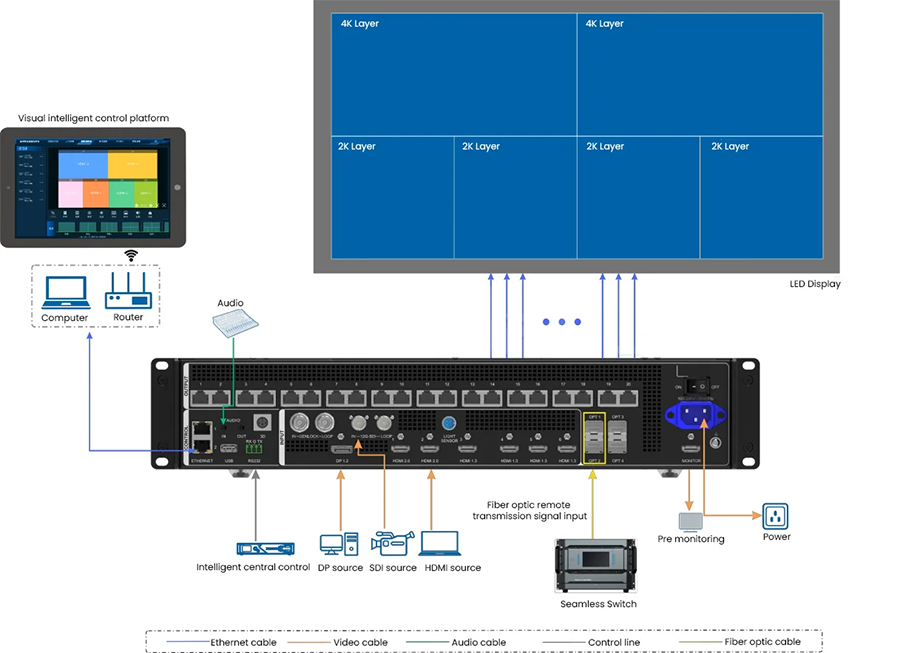
A dedicated low-latency LED control system minimizes processing delays across the full signal workflow. The complete control ecosystem typically includes these core components:
- High-performance video processors with frame-level synchronization
- High-speed sending cards and receiving cards with optimized firmware
- Precision genlock synchronization hardware
- Optimized display management and calibration software
The core goal is stable, real-time image reproduction that meets the strict technical standards of live broadcast, XR virtual production, and large-scale stadium-grade projects.
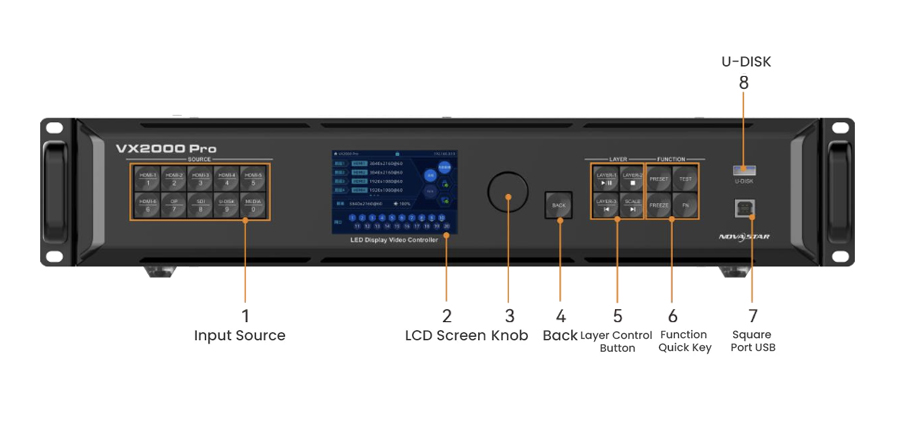
The NovaStar Advantage: Industry Benchmark for LED Control Systems
NovaStar has established itself as a global standard brand for professional LED display control hardware. Thousands of LED installations across stadiums, broadcast studios, commercial landmarks, and XR production studios worldwide rely on NovaStar-based control hardware for stable, long-term operation.
Ultra-Low Latency Processing Capabilities
NovaStar's advanced control hardware is engineered to reduce frame delay and optimize real-time signal processing across the entire pipeline. High-speed data transmission achieves precise frame-level synchronization, which is why it remains the preferred controller for live-event-grade LED walls and XR virtual production volumes.
High Refresh Rate and HDR Support
Professional-grade LED displays often require refresh rates from 3840Hz up to 7680Hz, paired with HDR and 16-bit grayscale performance. NovaStar video processors maintain ultra-low latency while running these high-end parameters, producing flicker-free, vivid LED visuals even under professional camera shooting conditions.
Proven Reliability for Mega-Scale Events
From FIFA World Cup stadium advertising and international music concerts to professional XR virtual production studios, NovaStar-powered LED control hardware delivers long-term stable performance under rigorous round-the-clock working conditions, making it a trusted choice for mission-critical projects.
NovaStar LED Controller vs. Traditional LED Controllers
| Feature | NovaStar Solutions | Conventional LED Controllers |
|---|---|---|
| Latency Performance | Extremely Low (Frame-Level Sync) | Moderate to High Lag |
| System Stability | Excellent (24/7 Operation) | Variable / Inconsistent |
| XR Virtual Production Compatibility | Strong Full Compatibility | Limited / Basic Support |
| High Refresh Rate (Up to 7680Hz) | Excellent Performance | Average Performance |
| Remote Display Management | Remote Access & Monitoring | Only Basic Local Control |
How Low-Latency LED Displays Benefit Buyers & Project Owners
- Improved live-streaming and live-broadcast video quality with perfectly synchronized audio and visuals
- Smoother camera-LED wall integration and reduced tearing for XR virtual production studios
- Higher-quality audience engagement and atmosphere for stadiums and live event venues
- Eliminated image lag and frame desync issues that degrade viewer experience
- Higher overall system reliability and reduced on-site technical failure risks
- Future-proof hardware architecture that supports later system upgrades and expansion
Jingruns Technology + NovaStar: Complete Low-Latency LED Solution
By integrating certified NovaStar control systems, Jingruns Technology provides all-in-one professional low-latency LED display solutions covering these core product categories:
- Indoor fine-pitch LED video walls optimized for XR virtual production volumes
- High-brightness outdoor LED billboards for stadiums and advertising
- Professional rental LED screens for concerts, live events, and e-sports tournaments
- Sports stadium perimeter LED displays for live sports broadcasting
Our NovaStar-integrated LED panels deliver 3840Hz+ high refresh rates, full-grade HDR compatibility, and steady signal transmission. We also offer fast installation services, long-term product warranties, and streamlined lead-times for global clients across 50+ countries.
Conclusion
As LED displays become deeply integrated into live broadcasting, large-scale live events, and modern virtual-production workflows, low-latency performance is non-negotiable for professional-grade projects. NovaStar stands out as the leading LED control-system brand thanks to its proven stability and cutting-edge signal-processing technology.
When you build a project that demands real-time visual performance and premium-level image quality, choosing a low-latency LED display system equipped with NovaStar hardware is a long-term, future-smart investment.
📩 Contact Jingruns Technology today for a custom low-latency LED display solution tailored to your project!
FAQ: Low-Latency LED Displays & NovaStar Systems
A: In XR production, the LED wall must update in real time as the camera moves. High latency causes motion parallax errors and visual tearing, breaking the illusion of a real 3D environment. NovaStar systems deliver frame-accurate sync for realistic results.
A: For professional broadcast and camera recording, a minimum of 3840Hz is recommended, and 7680Hz is preferred to completely eliminate scan lines and flicker on film.
A: Latency depends on the control system, receiving cards, and processing hardware. Upgrading to a NovaStar control system can significantly reduce latency, but full performance also depends on panel hardware specifications.
A: NovaStar is a widely adopted industry standard and supports most mainstream LED panels. Jingruns Technology pre-calibrates all panels with NovaStar systems before shipment for plug-and-play operation.
A: No. Modern NovaStar processors maintain full brightness, HDR, and 16-bit grayscale while delivering low latency, so there is no trade-off between speed and image quality.